In 1349, a merchant ship from Hansan drifted outside Bergen’s port in Norway. It turned out that the entire crew was dead. The wise thought that the ship would be burned, but the greedy took care of the cargo. With it came rats that had infected fleas and lice. The infection was transmitted through human bites. So the poet’s death came to Norway and not long afterwards, with the help of fleas, it had also come to Sweden.

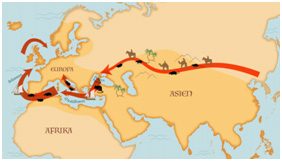
Digger death, or the black death, came to Europe in 1347. The first recorded outbreaks were in China in 1331. It then spread through humans and the infected fleas they carried along the trade routes. The death toll spread from Crimea to Genoa and Venice in Italy, which was hit hard.
But the black death has hit Europe way back in time. From the 500s onwards, Europe was affected by three plague pandemics, of which the first two were devastating. The first pandemic began in 541 with the Justinian plague. It haunted the Mediterranean countries for 200 years.
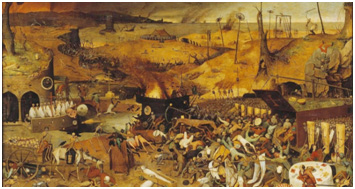
The plague returned to Sweden twenty times until the beginning of the 18th century. It was extremely contagious and up to one third of the population was infected. The plague bacterium, Yersinia pestis, kills the human immune system. It has three forms, bald plague with a mortality of 30-70 percent, lung plague and blood plague, both of which lead to a safe death. This meant that 200,000 to 500,000 died in Sweden and about 25 million in Europe. The consequences became so enormous that we probably cannot understand. Entire villages and communities were devastated and this also led to a serious crisis in agriculture and food supply. Stockholm lost almost a quarter of its population during the plague outbreak of 1710 -1711.
There is a story from Norway about a little girl, who was the only one who survived the dying death in her village on the farm Birkehaug in Justedalen. When, many years later, people come from the neighboring parish and find her, she has, in her loneliness, become shy and wild as a bird. Therefore, she is called Rypen. Henrik Ibsen was captivated by this drama and in 1859 wrote an opera libretto called Fjällfågeln. It was unfinished, but later became a theater.

The people of the Middle Ages thought it was the wrath of God that hit them with ”black death”. They hoped that prayers would help and groups for healing were formed. Today we know that there is a bacterium called Yersinia pestis, which spreads the infection via fleas. The bully plague develops when the plague bacteria enters the skin through the bite. The bacteria then spread to the lymph nodes. The result is large, lasting bulges in the groin. Lung plague occurs when the bacteria spread from human to human through the air. These outbreaks have been brief, as they hit the spot quickly.
For a long time it was thought that it was the rat’s fault. But now it is known that there were infected fleas in humans, which spread to other people. Therefore, the plague spreads rapidly in the population. Today we have antibiotics that allow us to quickly kill plague bacteria.
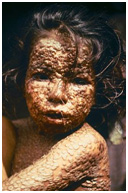
Cholera is one of the plague pandemics that came to Sweden from Asia via Finland in 1834. Cholera, or cholera asiatica, is a stomach disease caused by the bacterium Vibrio cholerae. The disease leads to severe bowel disorders and water-thin diarrhea. Cholera bacteria are found in nature and have been found in the Ganges River for thousands of years. It was thought to be primarily a tropical disease, but in the 19th century it spread from Asia to Russia and the rest of Europe and the United States.
The Spanish disease came a hundred years ago. It was an unusually severe and deadly form of influenza, spreading throughout the world. Of those diagnosed, 2.5 percent died. In the case of a normal flu epidemic, 0.1 percent die. This flu virus accompanied an aggressive bacterium for streptococci. The result was fatal pneumonia. Most of the victims were young people without other illnesses. In common flu epidemics, children, the elderly and the sick are affected. The ”Spanish” harvested 50 to 100 million people in the world. In India, over twelve million died. In Europe, Italy was worst hit by 400,000 dead.
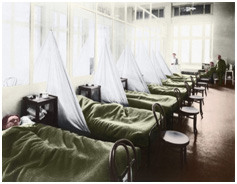
Tuberculosis is a disease that has existed since ancient times. Mycobacterium tuberculosis has been found in a bison ox that was 17,000 years old. Tuberculosis is a bacterium developed in animals and transmitted to humans as they began to keep livestock. It primarily affects the lungs, but can also attack other organs. Tuberculosis is not extinct in the world and is spread through the air from human to human. A quarter of the earth’s population has become infected, but not all are seriously ill. But if you do, the disease must be treated so as not to lead to a safe death. The cases that occur today in Sweden are in people who come from countries where tuberculosis is not eradicated.
Smallpox is a highly contagious viral disease with a mortality rate of about 30%. It is known that the virus was found in China and in India 12,000 years ago. Smallpox came to Europe in the 500s, first in southern Europe and slowly spread throughout Europe in the 17th century and in the 18th century it was a far cry. In the years 1750 to 1900, 300,000 died in Sweden. In the 20th century alone, more than 300 million people have died of smallpox in the world. In addition, many have been affected by being deaf, blind and with disfigured faces. Nowadays we have killed this virus!
The Asian is called a flu that came from China in 1956 and the virus spread all over the world. In Sweden, it had its peak in 1957 when more than 300,000 were infected. Worldwide, nearly four million people died in the Asian population.
The Hong Kong flu also came from China caused by a virus called H3N2. It spread across Asia and US troops in Vietnam took the virus home to the United States. It came to Sweden in 1968 with 300,000 infected. The Hong Kong influenza became a pandemic that killed one million people in the world.
Human immunodeficiency virus HIV is a retrovirus that attacks the immune system and can lead to AIDS. WHO estimates that 37 million people in the world are infected and since the outbreak in the 1980s, 35 million have died. HIV is transmitted through blood, semen and vascular secretions. In Sweden, 12,000 cases of HIV have been reported since 1983. Today, more than 7,000 people live with HIV in Sweden.
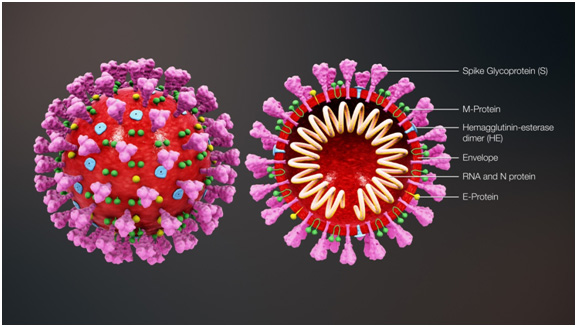
The harmful and dangerous viruses to humans develop in animals and spread to humans. The next stage is when the virus spreads from human to human. We have many years of experience with viruses that create different kinds of influenza. The really serious thing is when a new and unknown virus emerges, which our immune system does not recognize and can handle. Each virus attack leads to a certain immunity of the survivors. But influenza viruses are constantly changing in character and we cannot protect ourselves against new attacks, which in some years become particularly aggressive. That was the case with the Asian 1957 and Hong Kong influenza in 1968. Now the world has been hit by a new coronavirus with devastating consequences. But it probably won’t be like the death of the poet. However, we expect that a new unknown virus will develop somewhere and will spread to people. In the west, it can be as devastating as the death of poets!
PS An uncomfortable conclusion is that we should completely stop eating all kinds of meat (everything from bird to cow and pig!) And not keep pets if we will someday avoid the great unknown influenza pandemic, the return of black death.

 Kritikern Alf